
Английский язык 10 класс учебник Ваулина, Дули ответы – страница 126
- Тип: ГДЗ, Решебник.
- Авторы: Ваулина Ю. Е., Дули Д., Подоляко О. Е.
- Часть: без частей.
- Год: 2026.
- Серия: Школа России (ФГОС).
- Издательство: Просвещение.

7с GRAMMAR IN USE
7с ИСПОЛЬЗУЕМ ГРАММАТИКУ
PASSIVE VOICE (GRAMMAR REFENCE)
ПАССИВНЫЙ ЗАЛОГ (ГРАММАТИЧЕСКИЙ СПРАВОЧНИК)
Номер 1.
Read the examples and complete the rules with: to be, past participle, person. Explain how the passive sentence is formed.
Ознакомься с примерами и дополни правила: to be, past participle, person. Объясни, как образуется пассивный залог.
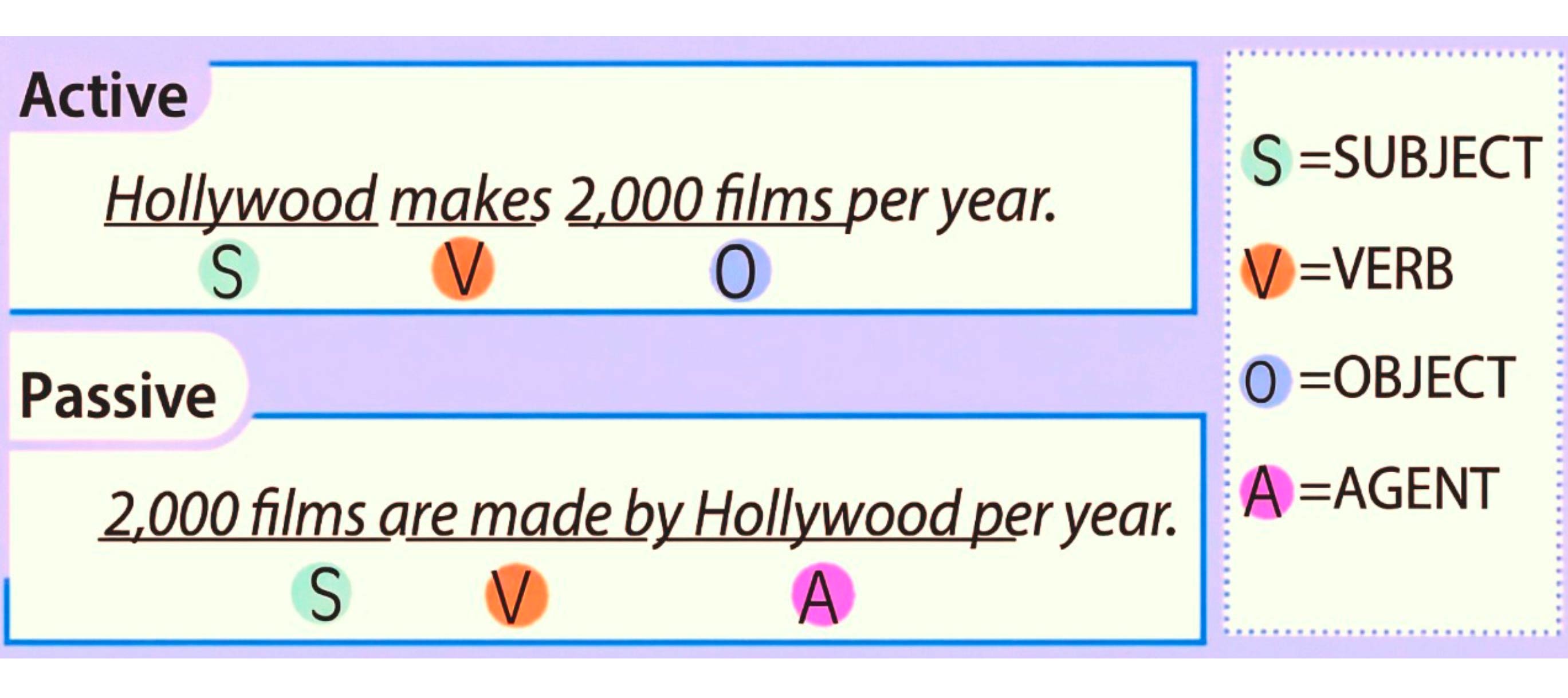
We use the Passive when we are more interested in the action than the 1) ..... or thing who does it.
We form the Passive with the appropriate form of the verb 2) ..... and the 3) ..... of the main verb.
We use the Passive when we are more interested in the action than the 1) person or thing who does it.
We form the Passive with the appropriate form of the verb 2) to be and the 3) past participle of the main verb.
The Passive Voice is used when the emphasis is on the action or object rather than the performer (agent).
The formula of education is the verb to be in the right tense + Past Participle (the third form of the verb / V3).
Перевод:
Мы используем страдательный падеж, когда нас больше интересует действие, чем 1) человек или вещь, которые его совершают.
Мы формируем страдательный падеж с помощью соответствующей формы глагола 2) быть и 3) причастия прошедшего времени главного глагола.
Страдательный залог используется, когда акцент делается на действии или объекте, а не на исполнителе (агенте).
Формулой образования является глагол to be в правильном времени + причастие прошедшего времени (третья форма глагола / V3).
Номер 2.
Read the examples (1–4) of the Passive in bold in the text. Which tenses are they in?
Прочти примеры (1–4) в пассивном залоге, выделанные жирным в тексте. В каком они времени образованы?
BFI London
IMAX
Cinema
This 500-seat cinema 1) was opened in 1999 and has been thrilling cinema audiences ever since with magnificent 3D shows! Visitors to the cinema 2) are promised a unique experience. Lifelike 3D images projected onto the UK’s biggest cinema screen make you feel as if you really 3) are being chased by hungry lions or transported a quarter of a million miles away to the moon!
You will also experience exciting improvements that 4) have been made to the cinema, including fantastic opportunities to learn more about film and television!
Don’t wait! Book tickets online for the ultimate cinema experience. You will be amazed!
1. was opened — Past Simple Passive;
2. are promised — Present Simple Passive;
3. are being chased — Present Continuous Passive;
4. have been made — Present Perfect Passive.
Перевод:
1. был открыт — Прошедшее простое время в пассиве (факт в прошлом);
2. обещаны — Настоящее простое время в пассиве (общее утверждение, регулярное действие);
3. преследуются — настоящее непрерывное время в пассиве (действие, происходящее прямо сейчас, в рамках описания 3D-эффекта);
4. были совершены — настоящее совершенное страдательное время в пассиве (действие в недавнем прошлом с результатом в настоящем).
Номер 3.
Choose the correct word. Explain your choices.
Выбери правильное слово. Объясни свой выбор.
1. The box office sold / were sold 15,000 tickets for the concert in an hour!
2. In Shakespeare’s Romeo and Juliet, two teenagers from rival families fall / are fallen in love.
3. Millions of video games have sold / have been sold all over the world.
4. The film sets / is set in England in the 18th century.
5. The audience applauded / were applauded wildly at the end of the performance.
6. Before 1927, films used to make / be made without sound.
1.
The box office sold 15 000 tickets for the concert in an hour!
(Ticket sales are an action performed by the ticket office; the agent is important and well-known, therefore an active pledge.)
2.
In Shakespeare’s Romeo and Juliet, two teenagers from rival families in love.
(The verb fall in love is not used in the passive — it is a state, not an fall action on an object.)
3.
Millions of video games have been sold all over the world.
(The emphasis is on the fact of the sale, not on the seller; the action is over, but the result is important.)
4.
The film is set in England in the 18th century.
(The stable expression is set — "the action takes place / unfolds in ...".)
5.
The audience applauded wildly at the end of the performance.
(The audience applauded themselves; the action is performed by the subject.)
6.
Before 1927, films used to be made without sound.
(The construction used to + be + V3 is used to describe habitual actions in the past in a passive manner.)
Перевод:
1.
За час в кассах было продано 15 000 билетов на концерт!
(Продажа билетов — это действие, осуществляемое кассой; агент — важная и известная персона, а значит, активный участник).
2.
В пьесе Шекспира "Ромео и Джульетта" двое подростков из враждующих семей влюблены друг в друга.
(Глагол "влюбиться" не употребляется в страдательном падеже — это состояние, а не воздействие на объект.)
3.
По всему миру были проданы миллионы видеоигр.
(Акцент делается на факте продажи, а не на продавце; действие завершено, но важен результат.)
4.
Действие фильма происходит в Англии в 18 веке.
(Закрепилось устойчивое выражение — "действие происходит / разворачивается в ...".)
5.
Зрители бурно аплодировали в конце представления.
(Зрители аплодировали сами себе; действие выполнялось самим субъектом.)
6.
До 1927 года фильмы снимались без звука.
(Конструкция, используемая для + be + V3, используется для пассивного описания привычных действий в прошлом.)
Номер 4.
a) Read the examples. When do we use by / with to introduce the agent? When can we omit the agent?
a) Прочти примеры. Когда мы используем by / with чтобы ввести агента? Когда мы можем отказаться от агента?
Example:
"Othello" was written by Shakespeare.
This dish is made with peppers.
The robber was arrested last night (by the police).
Пример:
Шекспир написал "Отелло".
Это блюдо готовится с перцем.
Грабитель был арестован прошлой ночью (полицией).
by — indicates the agent (the one who performed the action), especially if it is a person or a group of people.
Example: “Othello” was written by Shakespeare. (Othello was written by Shakespeare.)
with — Indicates the tool, material, or ingredient used for the action.
Example: This dish is made with peppers. (This dish is made with pepper.)
Omitting the agent is possible if:
The performer is obvious or unimportant (The streets are cleaned every day.);
Focus only on action or result (The new bridge will be opened next month.).
Перевод:
by — указывает на агента (того, кто совершил действие), особенно если это человек или группа людей.
Пример: “Othello” was written by Shakespeare. (Отелло был написан Шекспиром.)
with — указывает на инструмент, материал или ингредиент, использованный для действия.
Пример: This dish is made with peppers. (Это блюдо готовится с перцем.)
Опущение агента возможно, если:
Исполнитель очевиден или неважен (The streets are cleaned every day.);
Фокус только на действии или результате (The new bridge will be opened next month.).
b) Complete with by or with where necessary.
b) Заполни by или with, где необходимо.
1. This dish is made ..... four types of cheese.
2. Mickey Mouse was created ..... Walt Disney.
3. Lyn was given top marks for her essay ..... her teacher.
4. His desk was covered ..... papers.
1. This dish is made with four types of cheese. (ingredient)
2. Mickey Mouse was created by Walt Disney. (creator agent)
3. Lyn was given top marks for her essay by her teacher. (the agent is the one who made the assessment)
4. His desk was covered with papers. (the material / object that is covered)
Перевод:
1. Это блюдо готовится из четырех видов сыра. (ингредиент)
2. Микки Маус был создан Уолтом Диснеем. (автор — агент)
3. Учитель поставил Лин высшие оценки за сочинение. (автор — тот, кто давал оценку)
4. Его стол был завален бумагами. (материал / предмет, который был завален)
Номер 5.
Rewrite sentences 1–6 in the passive. In which sentences can we omit the agent? Why?
Перепиши предложения 1–6 в пассивном залоге. Где мы можем опустить агента? Почему?
1.
A newspaper journalist interviewed the cast after the opening night of the play.
The cast were interviewed by ...
2.
The director asked Joy to say her lines with more feeling.
3.
The Mayor will open the new theatre.
4.
Lots of people visit Universal Studios every year.
5.
The choreographer is teaching the singers how to dance.
6.
They’ve just finished filming the new James Bond film.
1.
The cast was interviewed by a newspaper journalist after the opening night of the play.
(The agent can be omitted: The cast was interviewed after the opening night.)
2.
Joy was asked by the director to say her lines with more feeling.
(The agent can be omitted, if it doesn't matter who exactly asked.)
3.
The new theatre will be opened by the Mayor.
(The agent is important — the role of the mayor is emphasized, therefore it is not omitted.)
4.
Universal Studios is visited by lots of people every year.
(The agent is obvious — tourists, so we can omit the agent: Universal Studios is visited every year.)
5.
The singers are being taught how to dance by the choreographer.
(The agent can be omitted in the general statement: The singers are being taught how to dance.)
6.
The new James Bond film has just been finished (by them).
(The agent is unimportant — the director of the film, therefore omitted: The new James Bond film has just been finished.)
Перевод:
1.
После премьеры спектакля журналисты газеты взяли интервью у актеров.
(Агент может быть опущен: актеры брали интервью после премьеры.)
2.
Режиссер попросил Джой произносить свои реплики с большим чувством.
(Агент может быть опущен, если не имеет значения, кто именно попросил.)
3.
Новый театр будет открыт мэром.
(Агент важен — подчеркивается роль мэра, поэтому его нельзя опускать.)
4.
Universal Studios каждый год посещает множество людей.
(Агент очевиден — туристы, поэтому мы можем опустить агента: Universal Studios посещают каждый год.)
5.
Хореограф учит певцов танцевать.
(Агента можно опустить в общем заявлении: Певцов учат танцевать.)
6.
Новый фильм о Джеймсе Бонде только что был снят (ими).
(Агент не важен — режиссер фильма, поэтому опущен: новый фильм о Джеймсе Бонде только что был снят).
С подпиской рекламы не будет
Подключите премиум подписку со скидкой в 40% за 149 ₽






Напишите свой комментарий.